Fluoride Treatments in Angier, NC: Simple Cavity Protection for Kids and Adults
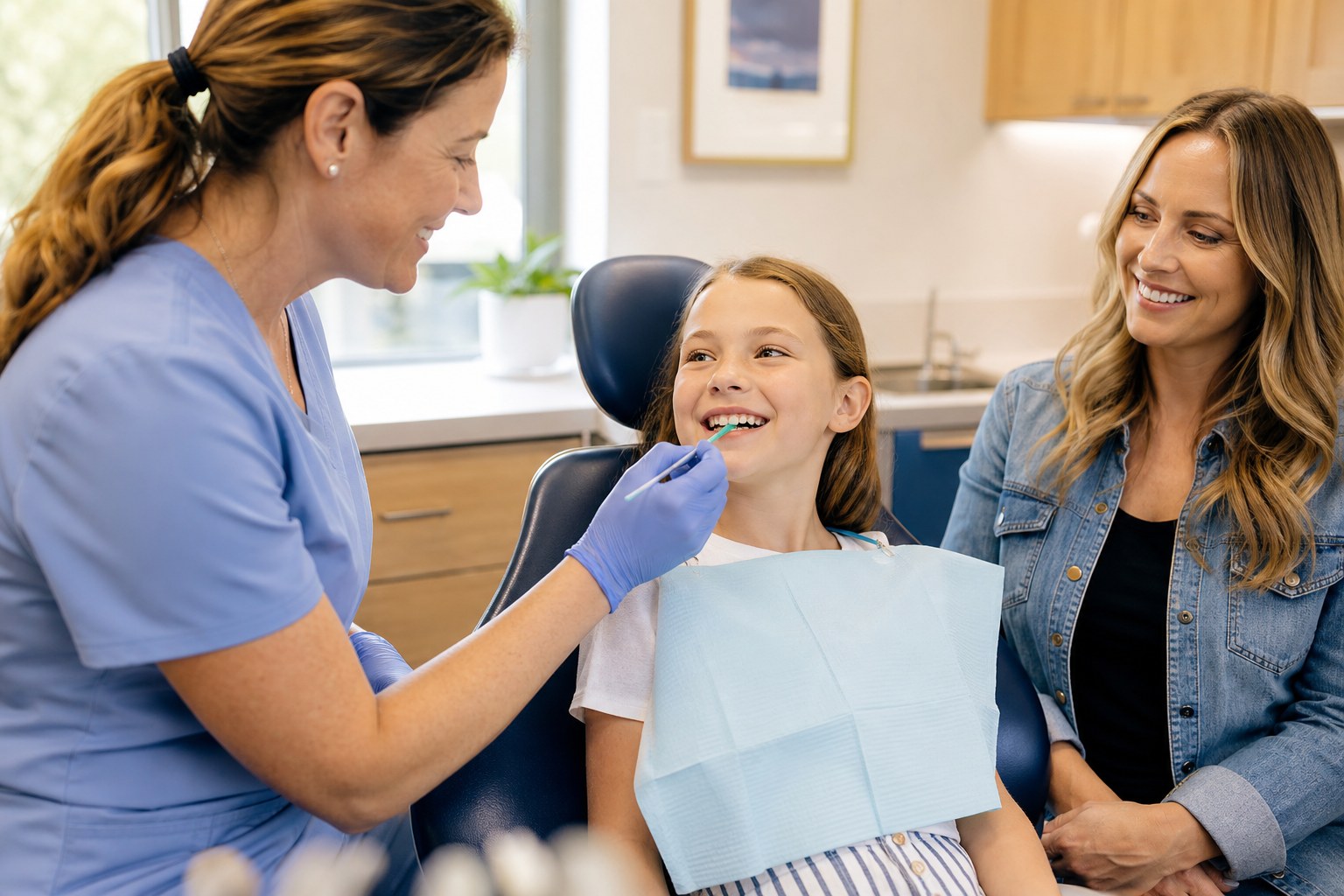
Fluoride isn't just for kids. Dr. Brenda Gong at Accent Family Dentistry in Angier, NC explains how a two-minute professional fluoride treatment strengthens enamel, calms sensitive teeth, and helps families across Angier, Holly Springs, and Willow Spring avoid fillings altogether.
What Fluoride Really Does to Your Teeth
Most people first hear about fluoride in a pediatric dental chair — that minty gel or foam brushed onto a child's teeth at the end of a cleaning. So it surprises a lot of our patients when Dr. Brenda Gong recommends a fluoride treatment for an adult. Cavity risk doesn't retire when you turn 30. Dry mouth from medication, receding gums, older fillings, coffee and sweet tea habits, orthodontic aligners, and years of enamel wear all put grown-up teeth at risk too.
At Accent Family Dentistry, we've built our preventive care around a simple idea: it is always easier, cheaper, and more comfortable to protect a tooth than to repair one. A professional fluoride treatment takes about two minutes, costs a fraction of a filling, and can stop early decay before a drill ever enters the picture.
Here's what fluoride actually does, who benefits most, and what to expect when Dr. Gong recommends it — whether you're driving in from Angier, Holly Springs, Willow Spring, or Coats.
Your enamel is in a constant tug-of-war. Every time you eat or drink something sugary or acidic, bacteria produce acid that pulls minerals out of the enamel surface — a process called demineralization. Between meals, your saliva puts some of those minerals back. Cavities form when the losing side wins for long enough.
Fluoride tips that balance back in your favor in three ways:
• It rebuilds weakened enamel. Fluoride helps draw calcium and phosphate back into softened spots, remineralizing early damage before it becomes a hole.
• It makes enamel more acid-resistant. The rebuilt surface contains fluorapatite, a mineral structure tougher and less soluble than the original enamel.
• It slows down the bacteria. Fluoride interferes with the ability of cavity-causing bacteria to produce acid in the first place.
The fluoride in toothpaste and in community water helps, but a professional treatment delivers a far higher concentration directly to the tooth surface, all at once. Think of daily brushing as regular maintenance and a professional treatment as reinforcement where it counts.
Who Benefits Most from a Professional Fluoride Treatment
Dr. Gong doesn't hand out fluoride automatically. During your exam she looks at your actual risk profile and recommends it when it will genuinely make a difference. Patients who tend to benefit the most include:
• Children and teens. Newly erupted permanent teeth have softer, more porous enamel for the first few years, exactly when brushing habits are least reliable.
• Anyone with a history of cavities. If you've needed fillings in the last few years, your mouth's chemistry is telling us something.
• Patients with dry mouth. Blood pressure medications, antidepressants, allergy medications, and certain health conditions reduce saliva — your natural cavity defense.
• Adults with gum recession. Exposed root surfaces have no enamel at all and decay much faster than the crown of the tooth.
• Braces and clear aligner patients. Brackets and attachments create places plaque loves to hide.
• Anyone with crowns, bridges, or older fillings. The margins where restorations meet natural tooth are a common starting point for new decay.
• People with sensitive teeth. Fluoride varnish helps seal exposed dentin tubules, which often takes the edge off sensitivity to cold.
If you're not sure whether you're in one of those groups, that's exactly what your preventive care visit is for. Ask us — we'll give you a straight answer, not a sales pitch.
What to Expect at Your Visit
The treatment itself is genuinely one of the easiest things we do. After your cleaning, when your teeth are freshly polished and free of plaque, we apply a concentrated fluoride varnish or gel with a small brush. It takes a minute or two, there are no needles, and nothing about it should hurt.
Varnish sets quickly on contact with saliva and leaves a slightly textured feeling for a few hours. We'll ask you to avoid hot drinks, alcohol-based mouthwash, and crunchy or sticky foods for the rest of the day, and to skip brushing until the next morning so the fluoride has time to work. That's the whole aftercare list.
For children, we usually pair fluoride with dental sealants on the back molars — sealants physically block food from the deep grooves while fluoride strengthens the surrounding enamel. Together they're one of the most effective cavity-prevention combinations in dentistry.
Most patients at higher risk do best with a treatment at every six-month cleaning; some benefit from a three- or four-month interval for a while. Dr. Gong will tell you honestly which category you're in, and revisit it as things improve.
Is Fluoride Safe? An Honest Answer
It's a fair question, and we'd rather address it directly than dance around it. Fluoride has been studied for decades and is endorsed as safe and effective at recommended doses by the American Dental Association and the CDC. Concerns almost always trace back to swallowing too much over long periods — most visibly as dental fluorosis, faint white flecking on developing teeth in young children.
That's a dosing issue, and it's manageable. In-office treatments are applied topically, not swallowed, and we use age-appropriate amounts. For toddlers we recommend a rice-grain smear of toothpaste rather than a full ribbon, and we're happy to walk parents through it at the appointment.
If you'd still prefer to limit fluoride, tell us. There are other tools — including silver diamine fluoride for arresting active decay, xylitol products, dietary changes, and tighter checkup intervals. We'd much rather build a prevention plan you'll actually follow than push one you're uneasy about.
Preventive Care Close to Home in Angier
Accent Family Dentistry is a family-owned, independent practice on E Depot Street in Angier, and we see whole families — grandparents, parents, and kids in the same afternoon. That continuity is what makes prevention work: when we've watched a tooth for years, we notice the early chalky spot that a first-time visitor's exam might not flag as urgent.
We also know how full a Wake and Harnett County week gets. Our team is happy to stack family appointments back-to-back so one trip covers everyone, and members of our team are bilingual in English and Spanish, so Spanish-speaking families are welcome here.
If it's been more than six months since your last cleaning — or if you've been quietly worried about a spot on a tooth — this is the low-stakes way to deal with it. Call Accent Family Dentistry at 919-639-3911 or request a visit online. We're open Monday through Thursday, 9:00 AM to 6:30 PM, and we serve families from Angier, Fuquay-Varina, Apex, Holly Springs, Willow Spring, Lillington, Coats, and Benson.
Ready to schedule an appointment?
Call Accent Family Dentistry in Angier, NC at 919-639-3911 or use our online scheduler.
Schedule OnlineQuestions About Your Dental Health?
Dr. Gong and her team are always happy to answer your questions and help you understand your treatment options.