Tooth-Colored Fillings in Angier, NC: What to Expect When a Cavity Needs Repair
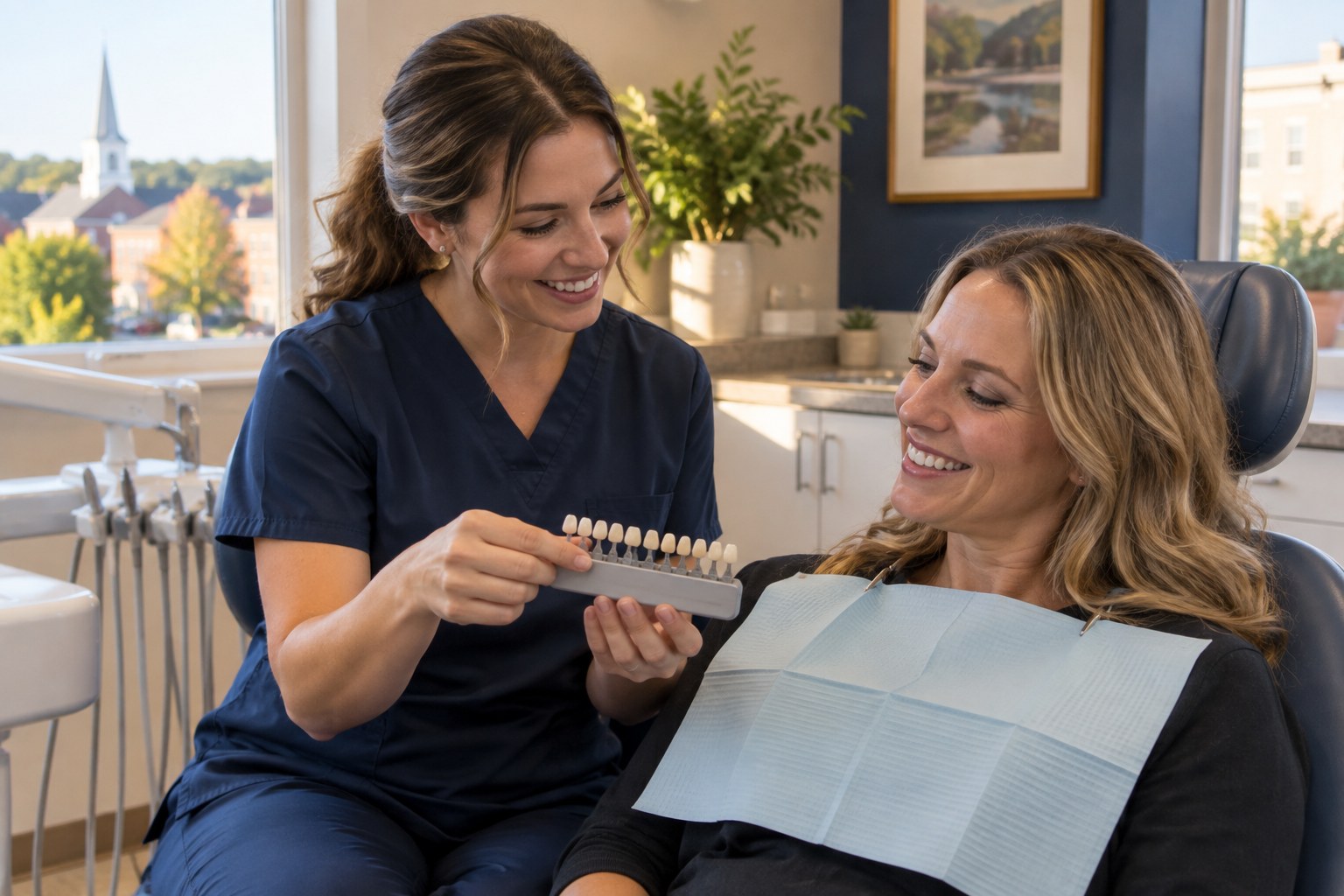
A small cavity is easy to fix when it's caught early. Dr. Brenda Gong repairs teeth with natural-looking composite fillings at Accent Family Dentistry in Angier — a quick, comfortable visit, with a shade match so exact nobody will ever spot the repair.
Why Tooth-Colored Fillings Have Replaced Silver
A small cavity rarely announces itself. Most patients who come to Accent Family Dentistry for a filling had no pain at all — the spot showed up on an X-ray or during a routine exam, long before it had a chance to cause trouble. That is exactly the point of catching decay early: the repair is small, quick, and comfortable.
Dr. Brenda Gong and our team have filled a lot of teeth for families across Angier, Fuquay-Varina, Willow Spring, and Lillington, and the question we hear most is some version of "will anyone be able to tell?" With today's tooth-colored composite fillings, the honest answer is almost always no. As a family-owned, independent practice on E Depot St, we take the time to match, shape, and polish each filling so it disappears into your smile.
For decades, cavities were repaired with silver amalgam. It worked, but it came with trade-offs — a dark spot in your smile and a wedge-shaped filling that required removing more healthy tooth than necessary. Composite resin changed that.
• It matches your tooth. Composite comes in a range of shades, and Dr. Gong selects the one that blends with your enamel so the repair is invisible in conversation, photos, and selfies.
• It bonds to the tooth. Composite chemically bonds to enamel and dentin instead of just sitting in a hole, so we can remove less healthy structure and leave your tooth stronger.
• It works anywhere. Front teeth, back molars, chipped edges, worn spots along the gumline — composite handles all of them.
• No metal, no temperature shock. Many patients find composite less sensitive to hot coffee and cold drinks than the old metal fillings they grew up with.
You can read more about our approach on our tooth-colored fillings page, part of our broader restorative dentistry care.
What Happens During a Filling Appointment
Most single fillings take 30 to 60 minutes from start to finish — one visit, no lab work, no temporary.
• A look at the whole picture. Dr. Gong reviews your X-rays and exam findings and shows you exactly what she sees, so you know why the tooth needs treatment before anything begins.
• Comfortable numbing. We numb the area thoroughly and give it time to take full effect. Tell us if you feel anything at all — we would rather pause than have you push through.
• Gentle removal of decay. Only the softened, decayed portion of the tooth is removed. Healthy enamel stays.
• Layer-by-layer rebuilding. The composite is placed in thin layers and cured with a light, rebuilding the natural contour of your tooth.
• Shaping, checking, polishing. We adjust the filling until your bite feels exactly like it did before, then polish it smooth so plaque has nowhere to cling.
You will leave with a tooth that looks like it was never touched, and you can eat as soon as the numbness wears off.
Does It Hurt? Honest Answers for Nervous Patients
Plenty of adults in Angier put off a small filling for years because of a rough dental experience decades ago. We understand that, and we build our appointments around it.
Dr. Gong works at a pace you set. We explain each step before it happens, use a stop signal so you stay in control, and never lecture anyone about the time between visits. For patients whose anxiety runs deeper, we can talk through sedation options so a straightforward filling does not cost you a week of dread.
Our team also includes bilingual (English/Spanish) staff members, so Spanish-speaking patients and family members can ask questions and hear answers clearly. Understanding your own treatment should never depend on which language you are most comfortable in.
Small Cavity Now or a Crown Later
Decay does not stop on its own. It moves through enamel into dentin, and once it reaches the nerve, a simple filling is no longer an option.
• A filling repairs a small to moderate cavity in one short visit.
• A crown becomes necessary when too much tooth structure is lost for a filling to hold.
• A root canal is needed when bacteria reach the nerve — usually announced by throbbing pain or swelling.
Treating a cavity while it is small is the difference between one 40-minute appointment and a multi-visit rebuild. That is also why Dr. Gong is direct with families about routine preventive care: regular exams and cleanings are how small problems stay small.
Making Your Filling Last
A well-placed composite filling can serve you for many years with basic care.
• Brush twice and floss once daily. New decay can start at the edge of an existing filling, and floss is the only thing that reaches between teeth.
• Ease up on ice and hard candy. Composite is strong, but crunching ice chips can chip a filling just like it can chip enamel.
• Wear a nightguard if you grind. Clenching wears fillings down fast. If you wake up with a sore jaw, mention it.
• Keep your checkups. We check every existing filling at each visit and replace one long before it fails.
• Say something about new sensitivity. A filling that suddenly feels sharp, high, or sensitive is worth a quick look, not a wait-and-see.
Schedule a Visit With Dr. Gong
Whether you are coming from Angier, Coats, Benson, Apex, or Holly Springs, we would be glad to take a look at that spot you have been wondering about. Accent Family Dentistry is at 86 E Depot St in Angier, open Monday through Thursday, 9:00 AM to 6:30 PM.
Call 919-639-3911 to schedule an exam, and let's take care of it while it is still simple.
Ready to schedule an appointment?
Call Accent Family Dentistry in Angier, NC at 919-639-3911 or use our online scheduler.
Schedule OnlineQuestions About Your Dental Health?
Dr. Gong and her team are always happy to answer your questions and help you understand your treatment options.